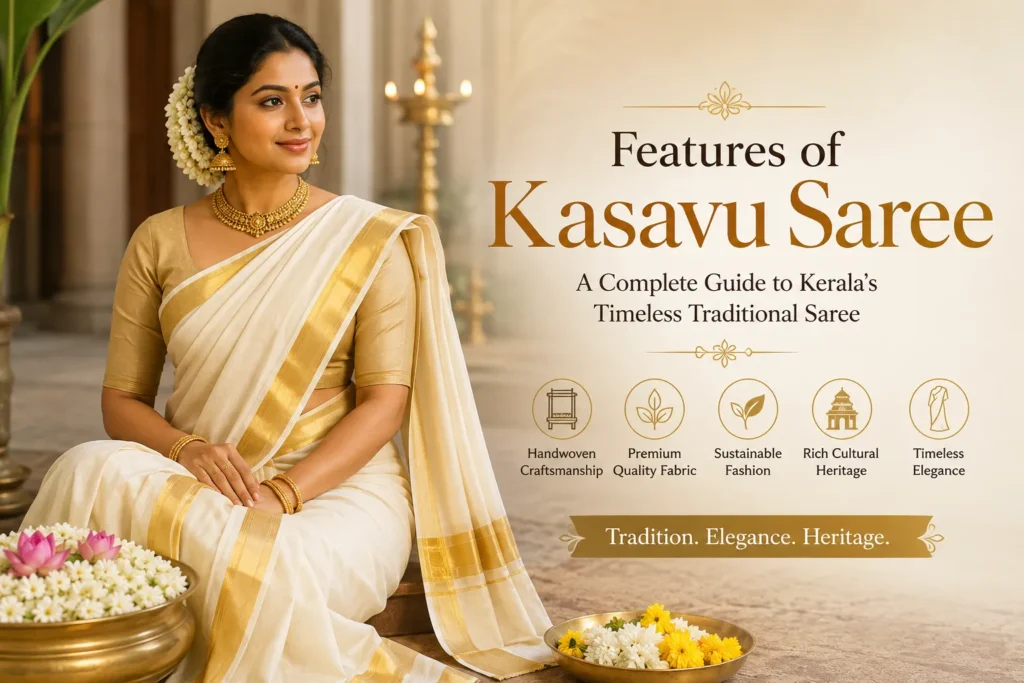
Features of Kasavu Saree: A Complete Guide to Kerala’s Timeless Traditional Saree
The Kasavu saree is one of Kerala’s most treasured traditional outfits, admired for its elegant white body and signature golden border. Worn during festivals, weddings, and cultural celebrations, it represents simplicity, grace, and heritage. While fashion trends continue to evolve, the Kasavu saree remains a timeless choice for women of all ages.
In this guide, we’ll explore the key features of a Kasavu saree, its cultural significance, styling ideas, and tips for choosing an authentic piece.
What Is a Kasavu Saree?
A Kasavu saree is the traditional attire of Kerala, typically crafted from cotton or silk with a distinctive golden zari border. The word “Kasavu” refers to the metallic gold thread woven into the border, giving the saree its iconic appearance.
Originally handwoven by skilled artisans, the Kasavu saree has become a symbol of Kerala’s rich textile heritage. Today, it is available in both classic and contemporary designs, making it suitable for traditional and modern occasions alike.
Why Is the Kasavu Saree Special?
The beauty of a Kasavu saree lies in its understated elegance. Unlike heavily embellished sarees, it relies on clean lines, premium fabric, and a shimmering border to create a sophisticated look. Whether worn during Onam or at a wedding, it never fails to make a graceful statement.
Top Features of a Kasavu Saree
1. Iconic Golden Zari Border
The most recognizable feature of a Kasavu saree is its golden zari border. Traditionally woven using metallic threads, the border adds a luxurious finish while preserving the saree’s minimalistic charm. Modern versions also feature wider borders and intricate motifs.
2. Elegant Off-White Body
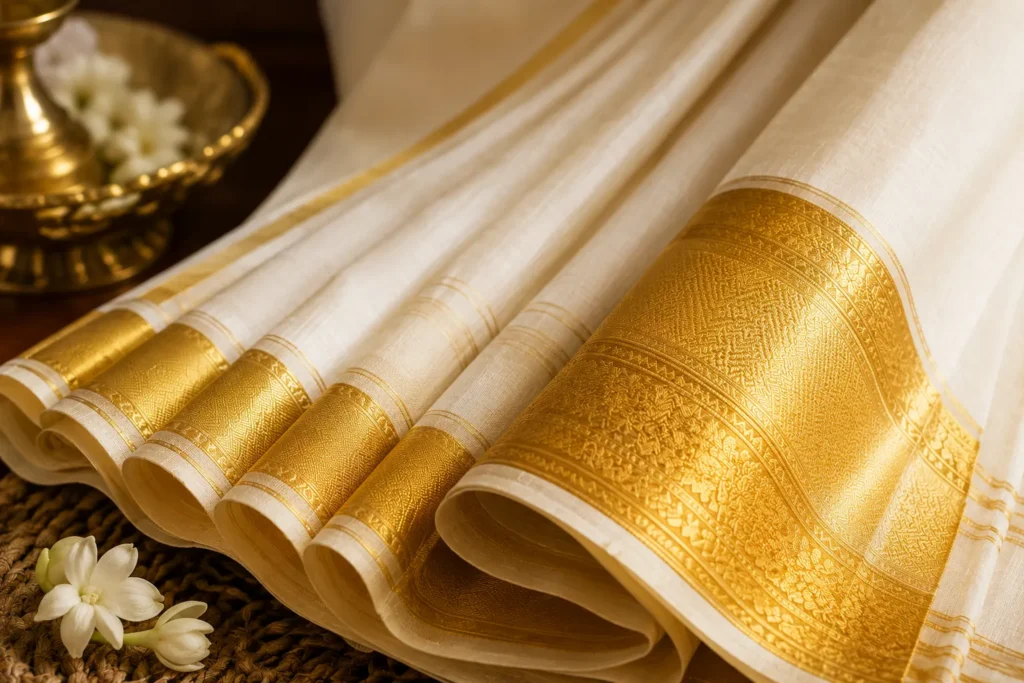
The cream or off-white body beautifully complements the golden border, creating a timeless combination. This subtle color palette symbolizes purity and sophistication, making it suitable for women of every age.
3. Comfortable Cotton Fabric
Traditional Kasavu sarees are usually made from breathable cotton, making them lightweight and comfortable for Kerala’s tropical climate. They are ideal for long celebrations, religious ceremonies, and festive gatherings.
4. Premium Silk Variants
For weddings and grand occasions, silk Kasavu sarees offer a richer appearance. Their luxurious texture and elegant drape make them a favorite among brides and women attending special events.
5. Handwoven Craftsmanship
Authentic Kasavu sarees are often handcrafted by experienced weavers using traditional techniques. Every weave reflects the skill and dedication of Kerala’s handloom artisans, making each saree unique.
6. Timeless Design
Fashion trends may change, but the Kasavu saree remains evergreen. Its simple yet elegant design ensures it never goes out of style and can be worn for years without losing its charm.
7. Rich Cultural Significance
The Kasavu saree is deeply connected with Kerala’s traditions. It is commonly worn during:
- Onam celebrations
- Vishu festivals
- Kerala weddings
- Temple festivals
- Cultural programs
For many families, wearing a Kasavu saree is a way of celebrating tradition and passing it on to future generations.
8. Versatile Styling Options
One of the greatest advantages of the Kasavu saree is its versatility. It pairs beautifully with:
- Gold blouses
- Contrast-colored blouses
- Embroidered designs
- Floral prints
- Contemporary designer blouses
Complete the look with traditional gold jewellery, jasmine flowers, and elegant footwear for a refined appearance.
9. Modern Design Variations
Today’s designers have reimagined the Kasavu saree with fresh styles while retaining its traditional essence. Popular options include:
- Tissue Kasavu sarees
- Designer Kasavu sarees
- Colored zari borders
- Floral and peacock motifs
- Linen and silk blends
These modern variations appeal to younger generations looking for a contemporary ethnic look.
10. Sustainable Fashion Choice
Many Kasavu sarees are made using natural fibers and traditional handloom techniques, making them an eco-friendly and long-lasting wardrobe investment. Choosing a handwoven Kasavu saree also supports local artisans and preserves Kerala’s weaving heritage.
Types of Kasavu Sarees
Depending on the occasion and personal style, you can choose from different varieties:
- Cotton Kasavu Saree – Lightweight and perfect for everyday festive wear.
- Silk Kasavu Saree – Ideal for weddings and grand celebrations.
- Handloom Kasavu Saree – Crafted by skilled artisans with traditional weaving methods.
- Designer Kasavu Saree – Features modern patterns, prints, and creative borders.
- Bridal Kasavu Saree – Premium-quality sarees designed for Kerala bridal wear.
How to Identify an Authentic Kasavu Saree
When shopping for a Kasavu saree, keep these points in mind:
- Check the quality of the fabric.
- Look for neat and uniform weaving.
- Ensure the zari has a premium finish.
- Buy from trusted boutiques or certified handloom stores.
- Verify authenticity labels whenever available.
Best Occasions to Wear a Kasavu Saree
The elegance of a Kasavu saree makes it suitable for many occasions, including:
- Onam celebrations
- Vishu festivals
- Kerala weddings
- Temple visits
- Family functions
- Cultural events
- Traditional photoshoots
Styling Tips for Kasavu Sarees
Enhance your look with these styling ideas:
- Pair it with traditional gold or temple jewellery.
- Add fresh jasmine flowers to your hairstyle.
- Choose a stylish embroidered or contrast blouse(Trending Saree blouse designes)
- Keep makeup minimal for a classic Kerala look.
- Complete the outfit with a clutch bag and elegant sandals.
How to Care for Your Kasavu Saree
Proper care helps preserve the beauty of your saree.
- Dry clean silk variants whenever possible.
- Wash cotton sarees gently with mild detergent.
- Store the saree in a cotton or muslin bag.
- Avoid direct sunlight for extended periods.
- Fold and refold occasionally to protect the zari border.