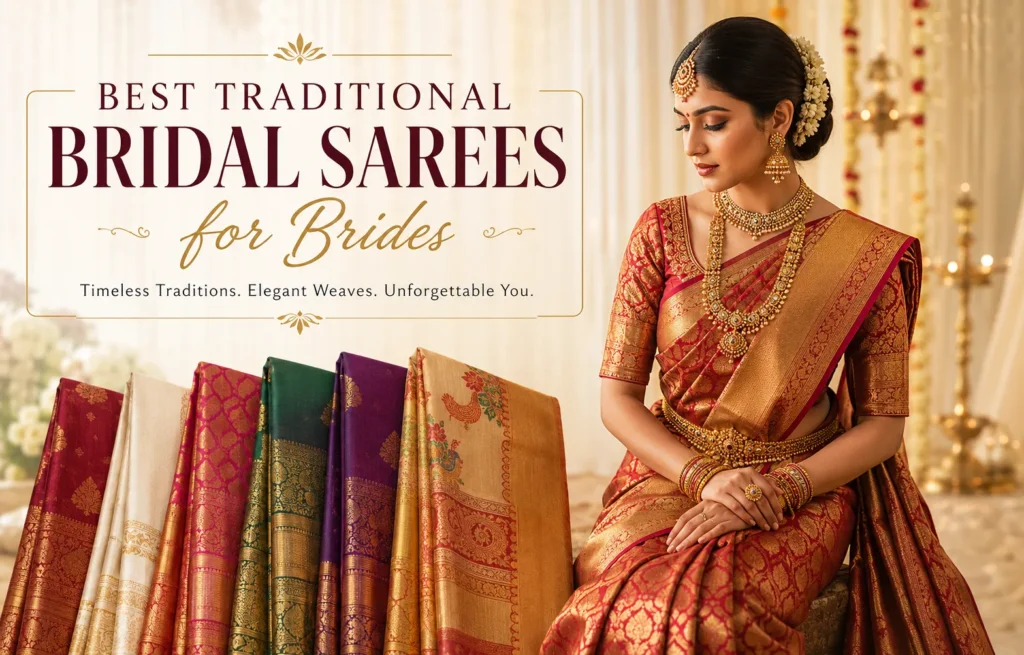
A bridal saree is more than a wedding outfit—it reflects tradition, craftsmanship, culture, and personal style. Across India, brides choose sarees in rich silks, elegant weaves, intricate zari, and traditional colors to create a timeless wedding look.
From the grandeur of Kanchipuram silk to the simplicity of Kerala Kasavu, the best traditional bridal sarees offer something for every bride. Whether you prefer a royal, vibrant, or minimalist appearance, choosing the right saree can make your wedding look both elegant and memorable.
What Makes a Saree Traditional Bridal Wear?
Traditional bridal sarees are distinguished by their rich fabrics, cultural details, and handcrafted designs. Unlike everyday sarees, they often feature elaborate borders, zari work, traditional motifs, and colors associated with weddings and celebrations.
Key features include:
- Rich silk and traditional fabrics
- Intricate weaving and craftsmanship
- Gold or silver zari work
- Traditional motifs and patterns
- Wedding-friendly colors
- Detailed borders and pallus
- Cultural and regional significance
The choice of saree often depends on the bride’s region, wedding ceremony, personal style, and jewellery.
Best Traditional Bridal Sarees for Brides
India has a rich variety of regional sarees that are perfect for bridal wear. Here are some of the most popular traditional choices.
1. Kanchipuram Silk Sarees
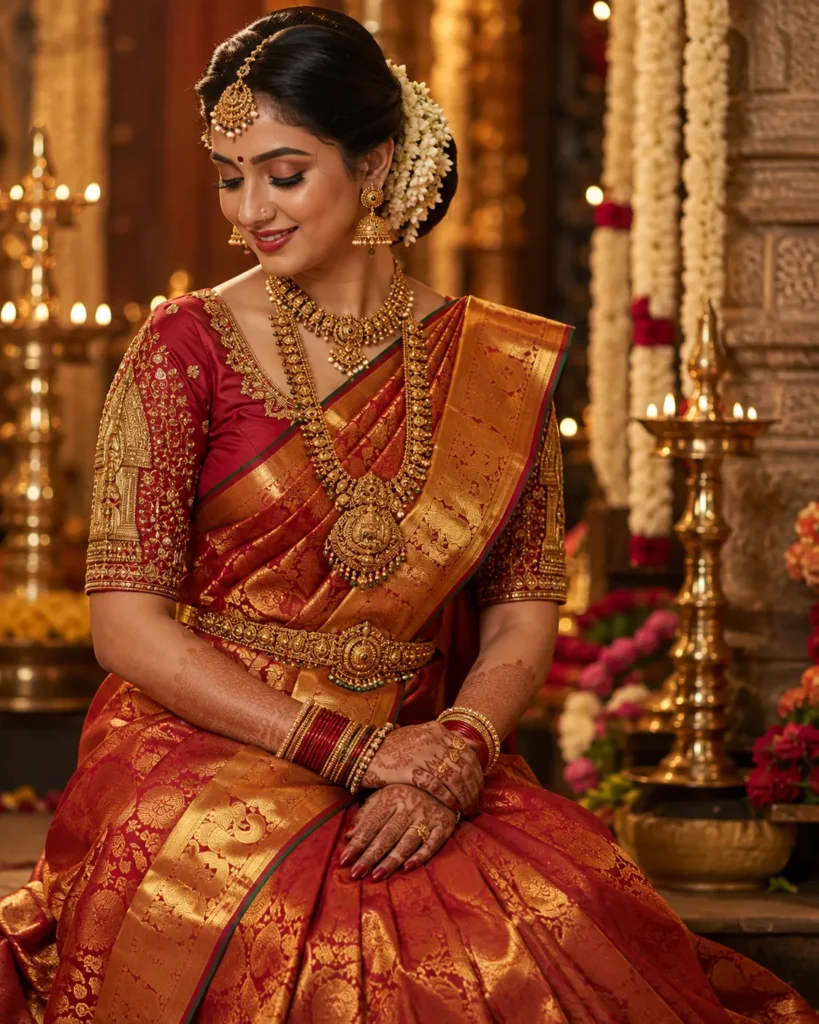
Kanchipuram silk sarees, also known as Kanjivaram sarees, are among the most popular choices for South Indian brides. Made from rich silk and traditionally woven with zari, they are known for their durability and luxurious appearance.
Traditional motifs such as peacocks, temples, flowers, and geometric patterns add character to the saree. Red, maroon, green, pink, and gold combinations are especially popular for weddings.
Best for: Traditional South Indian wedding ceremonies and brides who prefer a grand, royal look.
2. Kerala Kasavu Sarees
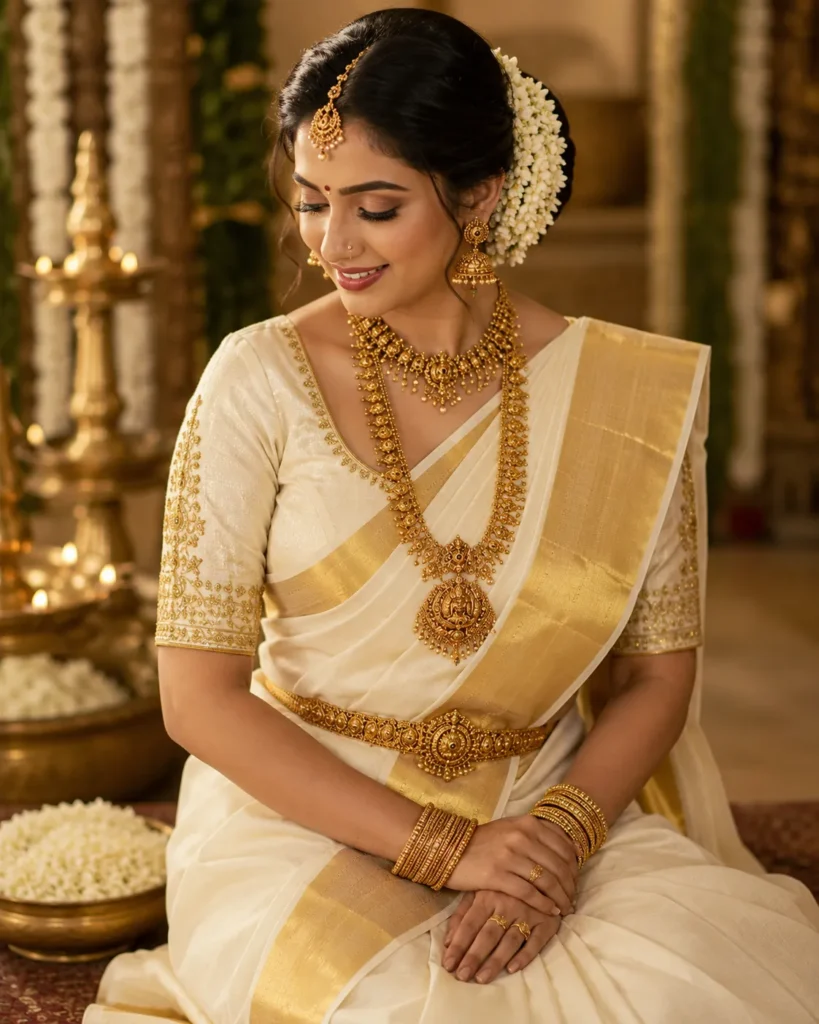
Kerala Kasavu sarees are known for their distinctive cream or ivory body and golden border. They offer a refined and graceful bridal appearance without excessive decoration.
Kasavu sarees have a strong connection with Kerala’s wedding traditions and are particularly suitable for brides who prefer simplicity and elegance.
The saree can be paired with a richly designed blouse, traditional gold jewellery, jasmine flowers, and a classic Kerala bridal hairstyle.
Best for: Kerala weddings and brides who prefer a minimal traditional look.
3. Banarasi Silk Sarees
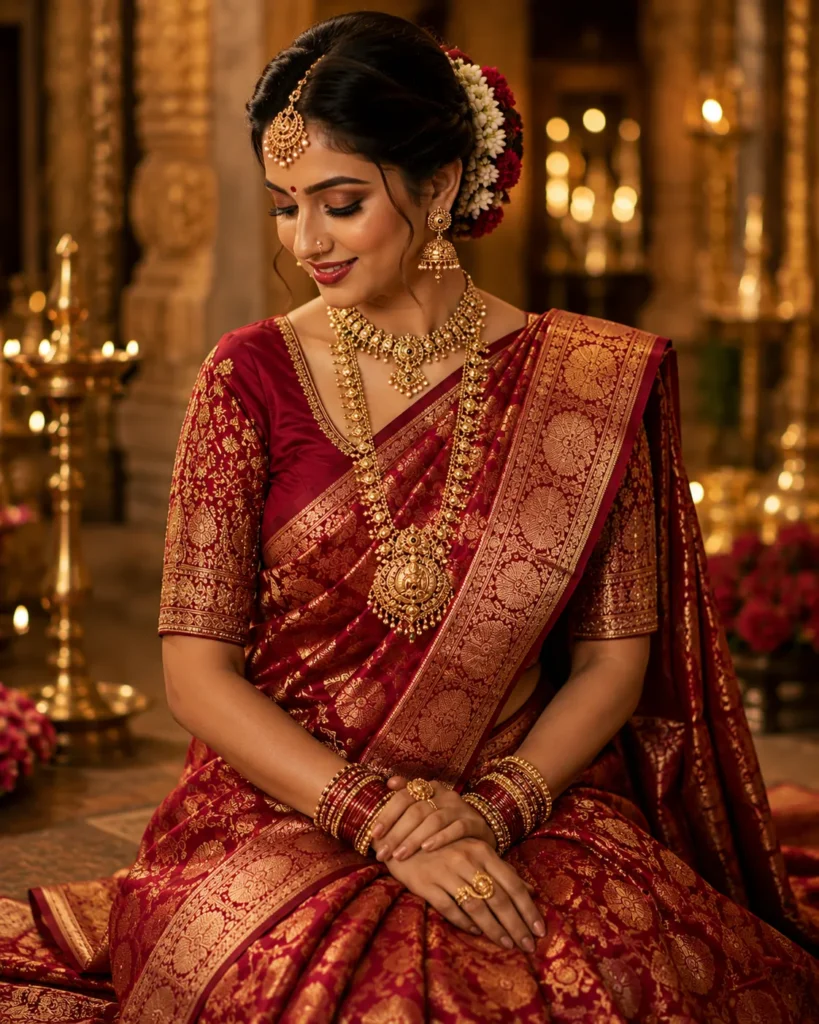
Banarasi silk sarees are celebrated for their intricate weaving, rich brocade patterns, and luxurious zari work. They bring a regal character to bridal fashion and are available in a wide range of colors.
Deep red, maroon, wine, pink, purple, and gold are excellent choices for a traditional bridal appearance.
The detailed patterns of a Banarasi saree also pair beautifully with statement jewellery and embellished blouses.
Best for: Brides looking for a luxurious and royal wedding look.
4. Mysore Silk Sarees
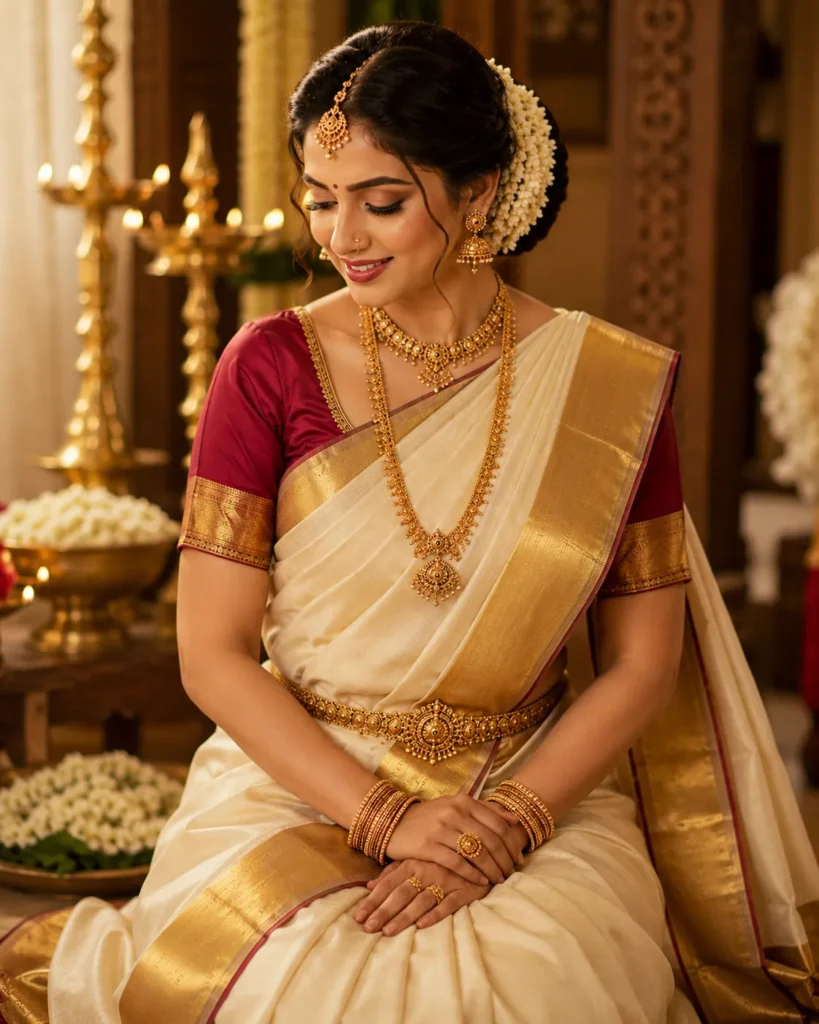
Mysore silk sarees are known for their smooth texture, lightweight feel, and understated elegance. Compared with heavier bridal silks, they can be a comfortable choice for brides who want a graceful appearance without excessive weight.
Their simple design and subtle zari details make them versatile for different wedding events.
Best for: Brides who prefer lightweight traditional sarees and an elegant, understated style.
5. Assam Silk Sarees
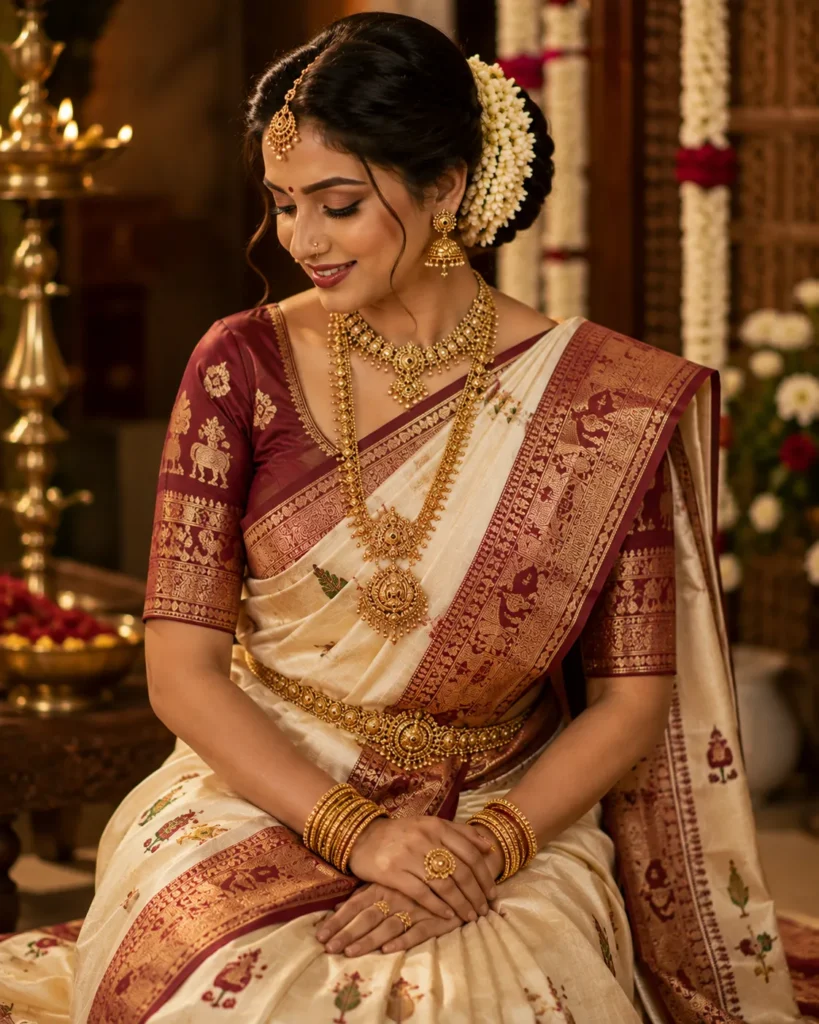
Assam silk sarees bring distinctive regional craftsmanship to bridal fashion. Their unique textures, traditional motifs, and cultural character make them an interesting choice for brides who want something different from commonly chosen bridal silks.
They can be styled with traditional jewellery and a blouse that complements the saree’s regional aesthetic.
Best for: Brides looking for distinctive Indian regional styles.
6. Paithani Sarees
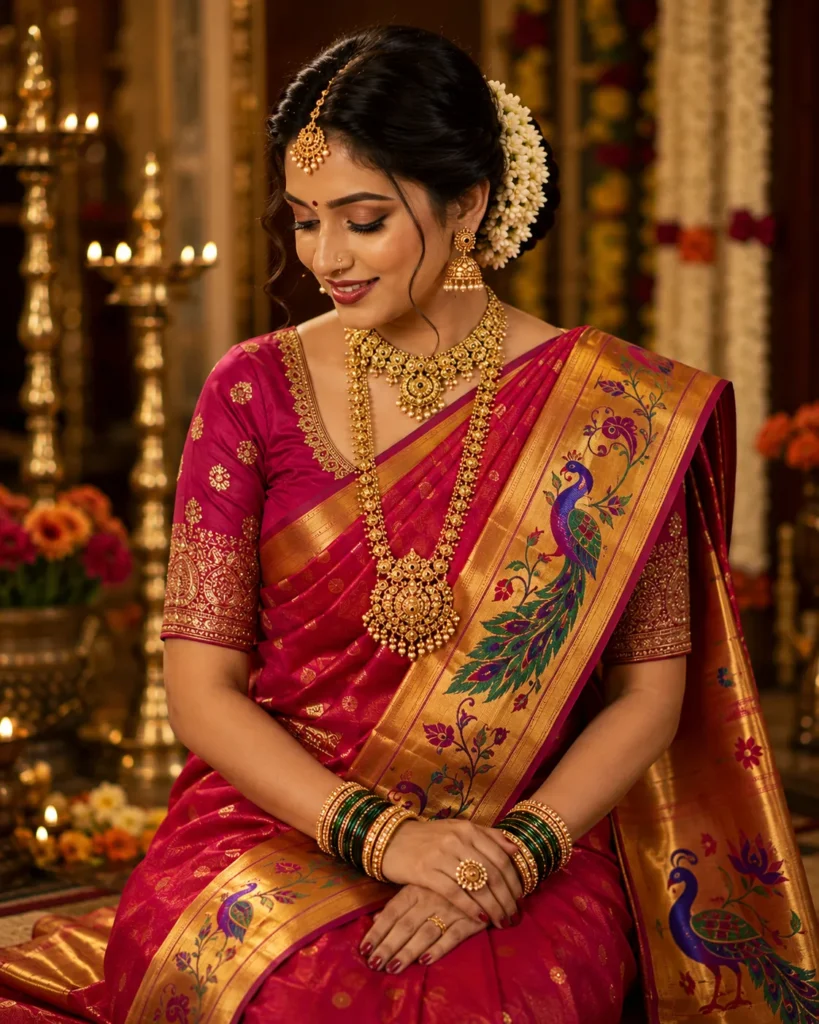
Paithani sarees are traditionally associated with Maharashtra and are admired for their handwoven craftsmanship, rich colors, and iconic peacock motifs.
Their vibrant shades and detailed pallus make them especially attractive for brides who want a colorful and culturally rooted wedding outfit.
Best for: Maharashtrian weddings and brides who love vibrant traditional designs.
7. Chanderi Sarees
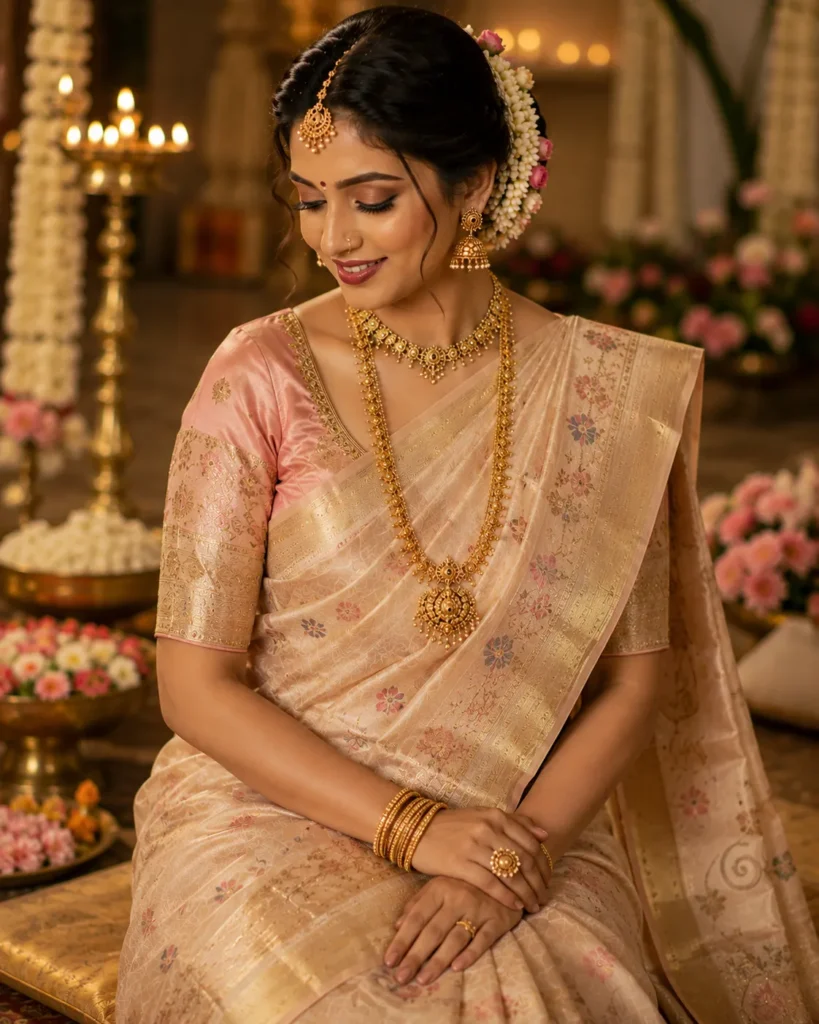
Chanderi sarees are lightweight and known for their delicate texture and traditional motifs. While they may not be the first choice for a heavily traditional wedding ceremony, they can be beautiful for pre-wedding events, intimate celebrations, or smaller ceremonies.
Their light feel makes them comfortable while still maintaining a sophisticated traditional appearance.
Best for: Pre-wedding functions and intimate wedding celebrations.
Traditional Bridal Saree Colors to Consider
Color plays an important role in bridal fashion. The ideal shade depends on regional traditions, wedding rituals, complexion, jewellery, and personal preference.
| Color | Bridal Appeal |
| Red | Classic and auspicious |
| Maroon | Rich and sophisticated |
| Gold | Luxurious and festive |
| Green | Traditional and vibrant |
| Pink | Feminine and elegant |
| Mustard | Warm and traditional |
| Ivory/Cream | Minimal and timeless |
You can also experiment with contrasting borders, dual-tone sarees, and contemporary blouse colors while keeping the overall bridal look traditional.
How to Choose the Best Traditional Bridal Saree
Choosing a bridal saree involves more than selecting a beautiful color. Consider these practical factors before making your final choice.
Consider the Wedding Ceremony
Think about the type of ceremony, location, traditions, and time of the wedding. A heavily embellished silk saree may work beautifully for a grand ceremony, while a lightweight traditional saree can be better for smaller functions.
Choose the Right Fabric
Fabric affects the saree’s appearance, comfort, and drape.
- Silk: Rich and traditional
- Cotton-silk: Comfortable with a classic appearance
- Organza: Lightweight and structured
- Chanderi: Light and elegant
- Traditional handloom fabrics: Cultural and distinctive
Choose a fabric that allows you to remain comfortable throughout the wedding celebrations.
Consider Your Personal Style
Your bridal saree should reflect your personality.
Rich and royal: Choose heavy silk, zari, and detailed motifs.
Minimal and elegant: Consider Kasavu, Mysore silk, or subtle traditional weaves.
Bright and colorful: Explore Paithani, Kanchipuram, and vibrant Banarasi sarees.
Classic and understated: Choose traditional colors with simple borders and minimal embellishment.
Match the Saree With Your Jewellery
Your saree and jewellery should complement rather than compete with each other.
Gold zari sarees work naturally with traditional gold jewellery, while simpler sarees can provide a beautiful background for statement necklaces, earrings, bangles, and bridal accessories.
The blouse color, zari shade, and jewellery should also create a balanced overall look.
Think About Comfort
A bridal saree may need to be worn for several hours. Heavy fabrics and elaborate embellishments can become uncomfortable over time.
Before buying, check the saree’s weight, fabric feel, drape, and ease of movement. A comfortable bride will naturally look more confident throughout the celebration.
Traditional Bridal Saree Blouse Designs
The blouse can completely transform the appearance of a traditional bridal saree. Popular choices include:
- High-neck blouses
- Traditional round-neck blouses
- Elbow-length sleeves
- Zari-work blouses
- Embroidered blouses
- Brocade blouses
- Statement-sleeve designs
For heavily woven sarees, a detailed blouse can enhance the bridal appearance. For simpler sarees, an embellished blouse can become the statement element of the outfit.
How to Style a Traditional Bridal Saree
Styling should bring together the saree, blouse, jewellery, hairstyle, and accessories.
For a classic bridal look, consider:
- Traditional gold jewellery
- A coordinated blouse
- Classic bridal draping
- Fresh flowers or traditional hair accessories
- Statement earrings
- Matching bangles
- A bridal hairstyle suited to the saree and ceremony
The key is balance. If the saree has heavy zari and patterns, simpler styling can prevent the outfit from looking overwhelming.
Traditional vs Modern Bridal Sarees
Traditional bridal sarees don’t have to look outdated. Modern brides can combine traditional fabrics and motifs with contemporary styling.
For example, a bride can pair a traditional Kanchipuram saree with a modern blouse, style a Kasavu saree with a statement blouse, or choose a traditional weave in a contemporary color.
This combination allows brides to preserve cultural elements while creating a look that feels personal and modern.
The best traditional bridal sarees combine cultural heritage, beautiful craftsmanship, and timeless style. From Kanchipuram and Kerala Kasavu to Banarasi, Paithani, Mysore silk, and Chanderi, every regional saree offers a unique way to celebrate Indian bridal fashion.
When choosing your saree, consider the wedding ceremony, fabric, color, personal style, jewellery, and comfort. The perfect bridal saree is ultimately one that makes you feel confident, comfortable, and beautifully connected to your traditions.