
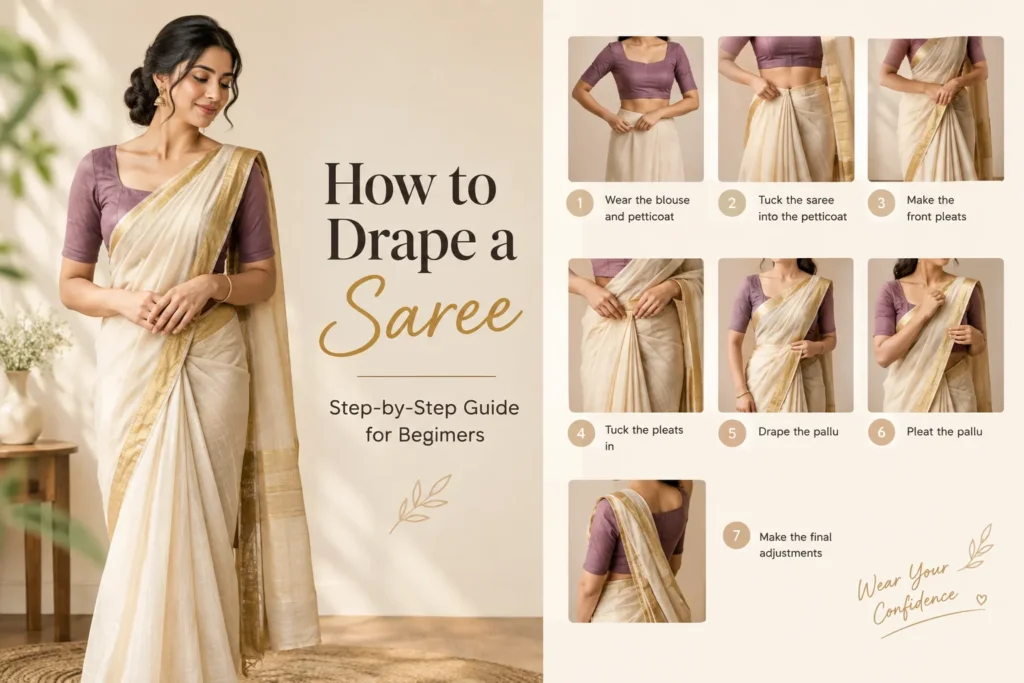
How to Drape a Saree: Step-by-Step Guide for Beginners
Draping a saree may look complicated at first, but once you understand the basic steps, it becomes much easier. The Nivi style, the most commonly used saree draping style, is a good place for beginners to start.
What You Need
Before you begin, keep these ready:
- Saree, usually around 5–6 metres long
- Matching blouse
- Petticoat or saree underskirt
- Safety pins
- Your footwear
- Accessories, if required
Step-by-Step: How to Drape a Saree
1. Wear the Blouse and Petticoat
Put on your blouse and tie the petticoat securely around your waist. The petticoat should be firm enough to hold the saree without slipping.
Wear your footwear before adjusting the saree length. This helps you get the correct height.
2. Tuck the Saree Into the Petticoat
Take the plain end of the saree, leaving the decorative pallu for later.
Starting near your right side, tuck the upper edge of the saree into the petticoat at your waist.
Wrap the saree around your body once, moving from right to left, and bring it back to the front.
3. Make the Front Pleats
Take the remaining fabric at the front and make several vertical pleats.
Usually, around 5–7 pleats work well, depending on the saree and your preference.
Keep the pleats approximately the same width and make sure they face the same direction.
4. Tuck the Pleats In
Hold the pleats together and tuck them neatly into the petticoat at the centre of your waist.
Make sure the pleats fall straight down and reach close to the floor without dragging.
Use a safety pin to secure the pleats if necessary.
5. Drape the Pallu
Take the remaining fabric and bring it around your body from left to right.
Then bring the pallu over your left shoulder.
Adjust its length so that it falls comfortably behind you.
6. Pleat the Pallu
For a neat and polished appearance, fold the pallu into several even pleats.
Place the pleated pallu over your left shoulder and secure it with a safety pin to the blouse.
You can leave the pallu hanging freely or adjust its length depending on the occasion.
7. Make the Final Adjustments
Finally, check:
- Are the front pleats straight?
- Is the saree length comfortable?
- Is the pallu sitting properly on your shoulder?
- Is the saree secure around your waist?
- Are there any unwanted folds or twists?
Once everything is adjusted, your saree is ready to wear.
Quick Tip for Beginners
Don’t try to make the saree perfect on your first attempt. Practice the basic wrap and pleats a few times before an important occasion. Lightweight cotton or synthetic sarees are generally easier to practice with than stiff silk or heavily embellished sarees.