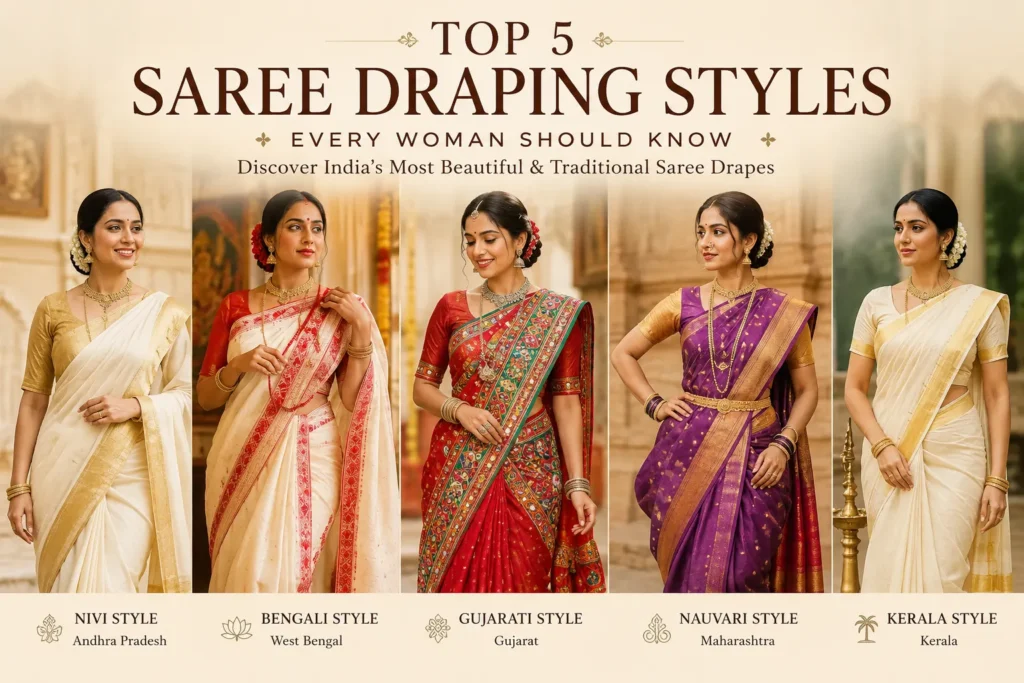
The saree is one of India’s most timeless garments, but what truly transforms its look is the draping style. Different regions have developed unique saree draping styles that reflect their culture, traditions, and way of life. Whether you’re dressing for a wedding, Onam, Durga Puja, or a festive celebration, choosing the right drape can elevate your appearance.
In this guide, explore the top 5 saree draping styles every woman should know and discover which one suits your personality and occasion best.
Why Saree Draping Styles Matter
A saree’s beauty isn’t just about the fabric—it’s also about how it’s worn.
Different draping styles help you:
- Highlight your body shape
- Match the occasion and tradition
- Stay comfortable throughout the day
- Showcase beautiful saree borders and pallu designs
- Express your personal style while honoring Indian heritage
.
1. Nivi Style (Andhra Pradesh)
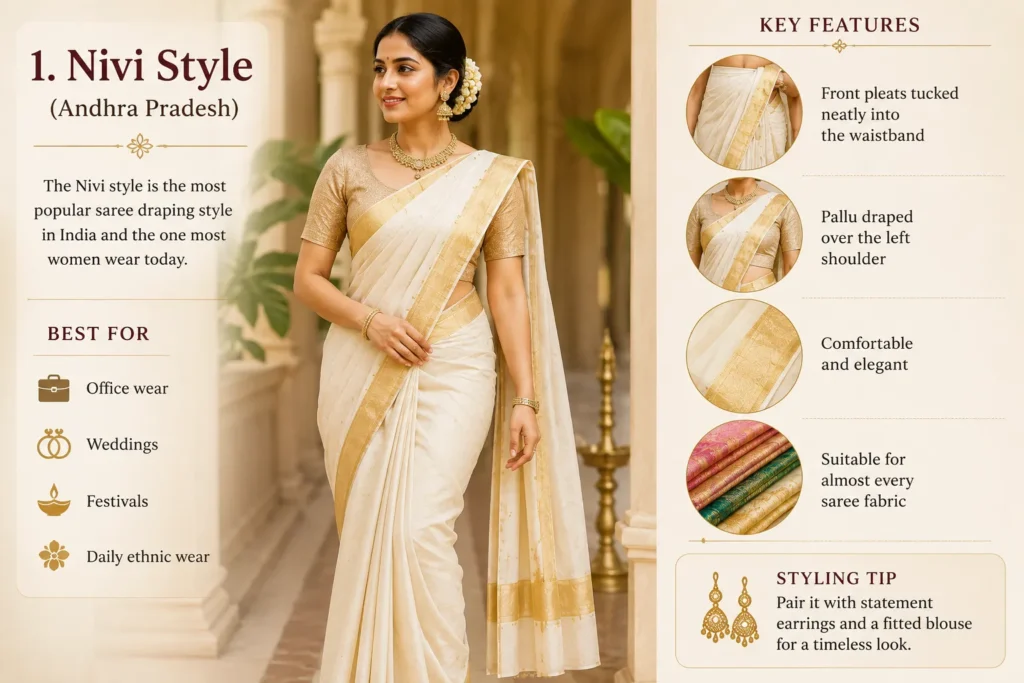
The Nivi style is the most popular saree draping style in India and the one most women wear today.
Key Features
- Front pleats tucked neatly into the waistband
- Pallu draped over the left shoulder
- Comfortable and elegant
- Suitable for almost every saree fabric
Best For
- Office wear
- Weddings
- Festivals
- Daily ethnic wear
Styling Tip: Pair it with statement earrings and a fitted blouse for a timeless look.
2. Bengali Style (Atpoure)
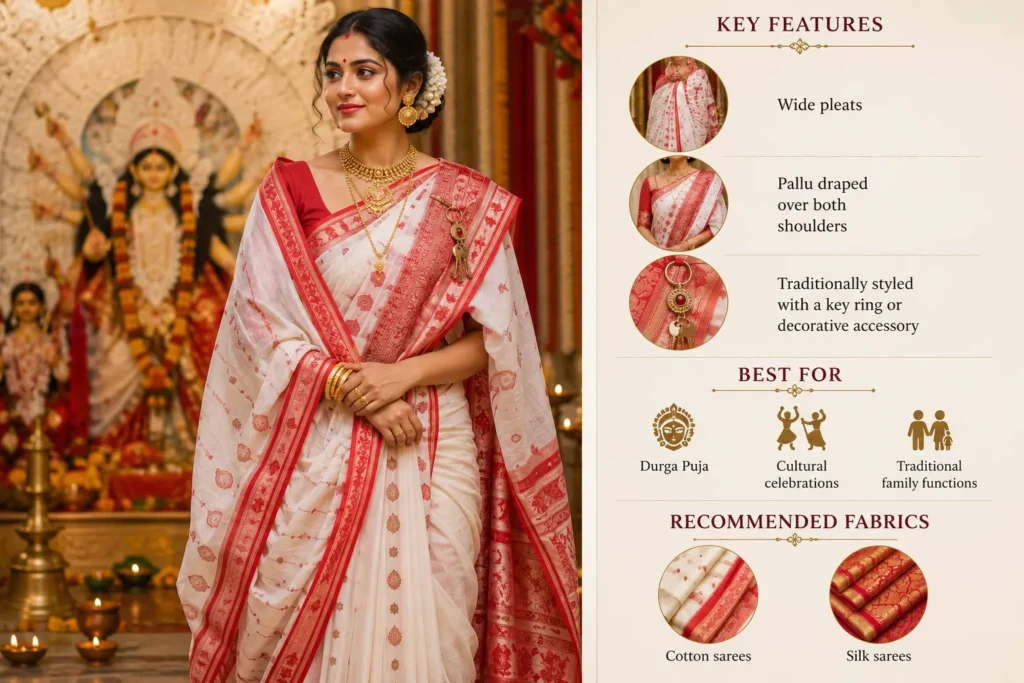
The traditional Atpoure drape from West Bengal is known for its graceful appearance and rich cultural heritage.
Key Features
- Wide pleats
- Pallu draped over both shoulders
- Traditionally styled with a key ring or decorative accessory
Best For
- Durga Puja
- Cultural celebrations
- Traditional family functions
Recommended Fabrics
- Cotton sarees
- Silk sarees
3. Gujarati Style (Seedha Pallu)
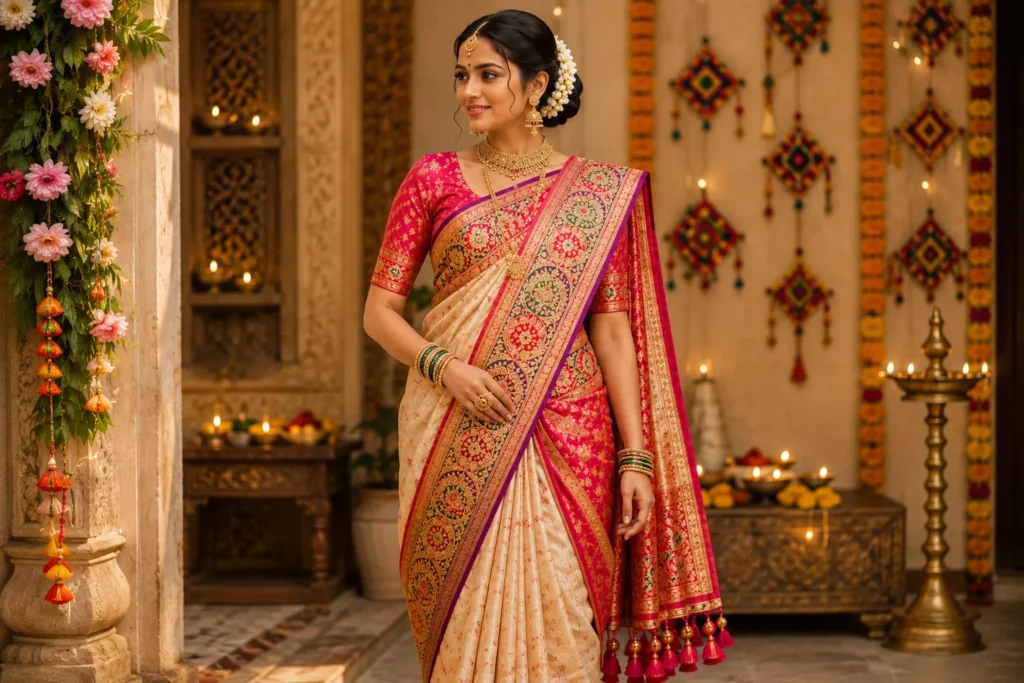
The Seedha Pallu style beautifully displays the decorative pallu across the front, making it perfect for heavily embroidered sarees.
Key Features
- Pallu falls over the right shoulder
- Front-facing pallu highlights intricate designs
- Festive and regal appearance
Best For
- Weddings
- Navratri
- Religious ceremonies
Style Tip: Complete the look with traditional jewelry such as bangles, a choker, and jhumkas.
4. Maharashtrian Nauvari Style
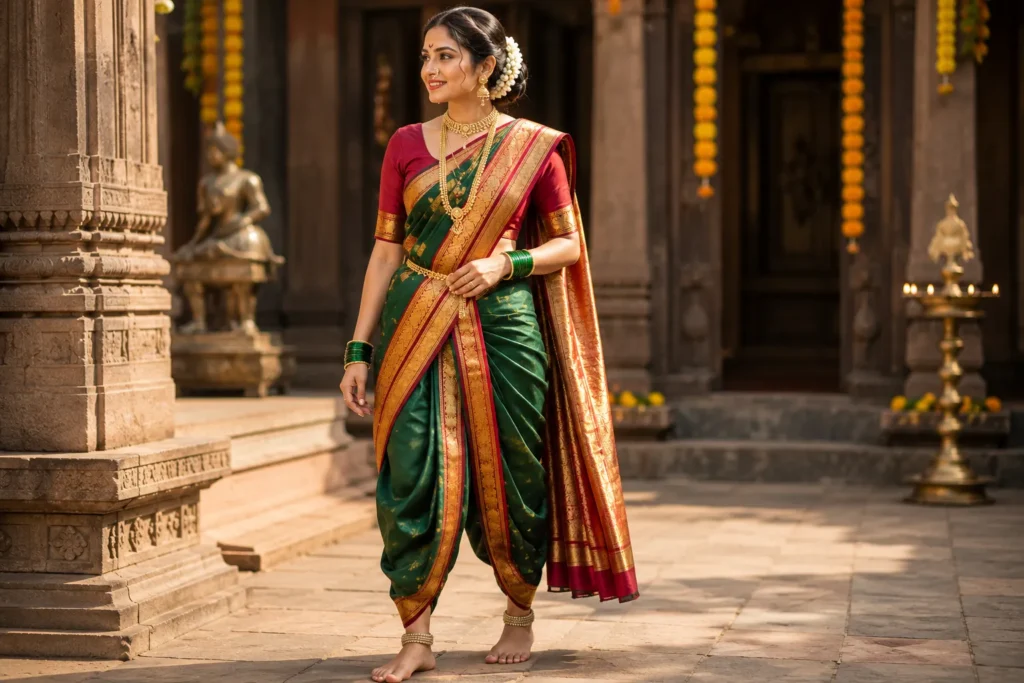
The Nauvari saree is a nine-yard drape inspired by the traditional warrior attire of Maharashtra.
Key Features
- Dhoti-style draping
- Allows easy movement
- Distinctive and powerful appearance
Perfect For
- Traditional weddings
- Festivals
- Cultural performances
Recommended Fabric
- Nine-yard silk sarees
5. Kerala Style (Mundum Neriyathum)
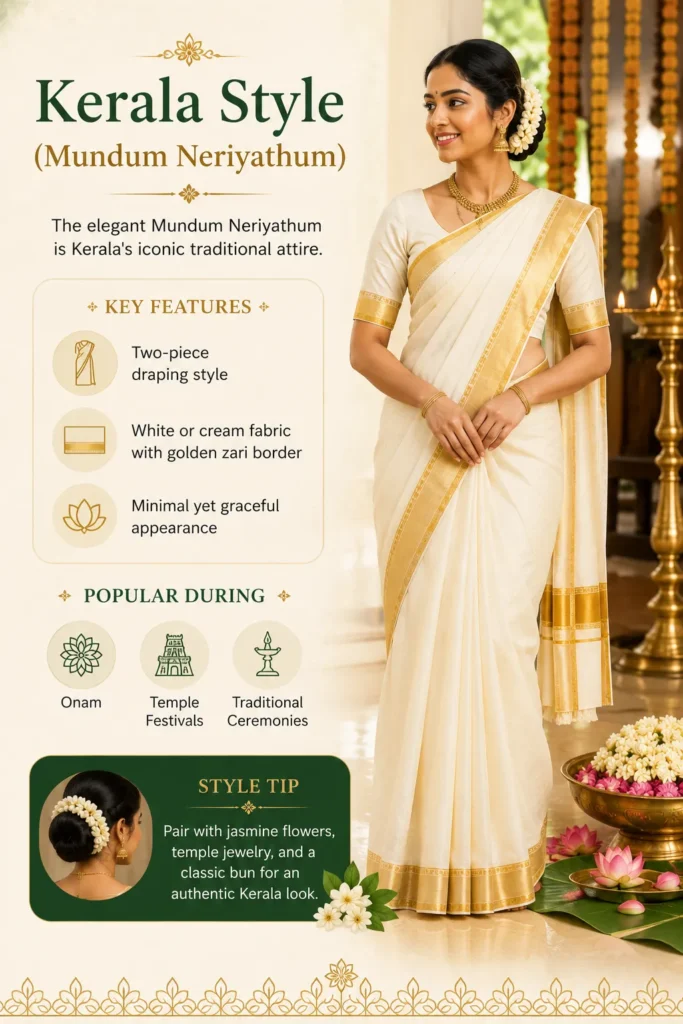
The elegant Mundum Neriyathum is Kerala’s iconic traditional attire.
Key Features
- Two-piece draping style
- White or cream fabric with golden zari border
- Minimal yet graceful appearance
Popular During
- Onam
- Temple festivals
- Traditional ceremonies
Style Tip: Pair with jasmine flowers, temple jewelry, and a classic bun for an authentic Kerala look.
Comparison of Popular Saree Draping Styles
|
Style |
Origin |
Best Occasion |
Fabric |
Difficulty |
|
Nivi |
Andhra Pradesh |
Daily wear, parties |
Any fabric |
Easy |
|
Bengali |
West Bengal |
Durga Puja |
Cotton, Silk |
Moderate |
|
Gujarati |
Gujarat |
Weddings, Navratri |
Silk |
Easy |
|
Nauvari |
Maharashtra |
Traditional events |
9-yard Silk |
Advanced |
|
Kerala |
Kerala |
Onam |
Kasavu Saree |
Easy |
Which Saree Draping Style Is Best for You?
Choose your drape based on:
- Beginners: Nivi or Kerala style
- Festivals: Gujarati or Bengali style
- Traditional celebrations: Nauvari
- Tall women: Gujarati and Nauvari styles
- Elegant minimalist look: Kerala Kasavu style
The right drape should complement your comfort, body type, and occasion.
Saree Styling Tip
Complete your ethnic look with these styling essentials:
- Choose a well-fitted blouse.
- Match jewelry with the saree’s embroidery.
- Wear comfortable heels or traditional footwear.
- Secure pleats using safety pins.
- Add a waist belt for a contemporary touch.
- Keep makeup balanced with the richness of your saree.
Common Saree Draping Mistakes
Avoid these common mistakes:
- Loose or uneven pleats
- Pallu that’s too long or too short
- Wearing unsuitable footwear
- Poorly fitted blouse
- Choosing the wrong fabric for a particular drape
Proper draping ensures both elegance and comfort.